MaineGeneral knows that hunger and health are deeply connected. We also know that many of our patients don’t have regular access to enough food to live active, healthy lives.
To address this need, in 2018, MaineGeneral joined the Community Health & Hunger Program in partnership with Good Shepherd Food Bank—a program funded through a series of grants, foundations and individual donors.
It all started in 2015 when our Prevention and Healthy Living program received a 3-year grant from the Maine Centers for Disease Control and Prevention. The goal of this grant was to develop a system for referring patients to programs in the community that could improve their health. This project highlighted a key barrier: while our medical teams wanted to help patients experiencing hunger, they were reluctant to bring it up because they didn’t know how to help or how to direct patients to appropriate resources. With assistance from Healthy Northern Kennebec, we created a food resource guide and began directing patients to soup kitchens and food pantries in the area.
This project connected patients to community resources but didn’t put food directly in the hands of those who were hungry. So in 2018, we took the program a step further. With a mini grant from the Good Shepherd Food Bank, we began distributing food bags at 2 of our primary care practices: Elmwood Primary Care and Winthrop Pediatrics. This pilot laid the groundwork for regularly screening patients for need and meeting those immediate needs in the moment. As more funding became available from various sources, other practices began to adopt the program. Over the last decade, our Health & Hunger Program has expanded from those 2 initial locations to 28 specialty care and primary care practices across Central Maine, and we have distributed tens of thousands of pounds of food to thousands of patients in need!
This work has only been possible with the support of many funders, including
- Healthy Waterville, which in 2019 provided funding for 55 food bags at Maine Dartmouth Family Medicine
- Kiwanis, which in 2019 gave funding for over 280 food bags to 3 pediatric practices
- Harvard Pilgrim Health Care, which in 2020 funded a project to introduce screening for basic needs at 4 new practices, create a Community Health Worker position to follow-up with patients, and distribute 500 emergency food bags and 500 Hannaford gift cards
- John T. Gorman Foundation, which in 2023 provided funding to screen 530 patients at our Addiction Medicine practice and distribute 376 food bags and resource guides
- Hudson Foundation, which in 2023 provided funding to purchase 625 food bags
- Healthy Northern Kennebec, which in 2024 provided funding to purchase 150 food bags
- Avangrid Foundation, the philanthropic arm of Central Maine Power’s parent company Avangrid, which in 2024 awarded a grant which helped purchase over 1,400 food bags
- The United Way of Kennebec Valley, which provided grants for 2025-2027 to cover patient basic needs—including food bags and Hannaford gift cards—for patients living with HIV/AIDS and those enrolled in our Community Health Worker program
- MaineGeneral’s Medical Executive Committee, which in 2024 gifted 700 food bags.
The Community Health and Hunger program has also received support and guidance over the years from MaineGeneral leadership, which has assisted us in adopting standard practices and created a dedicated staff position in 2018 to coordinate the program.
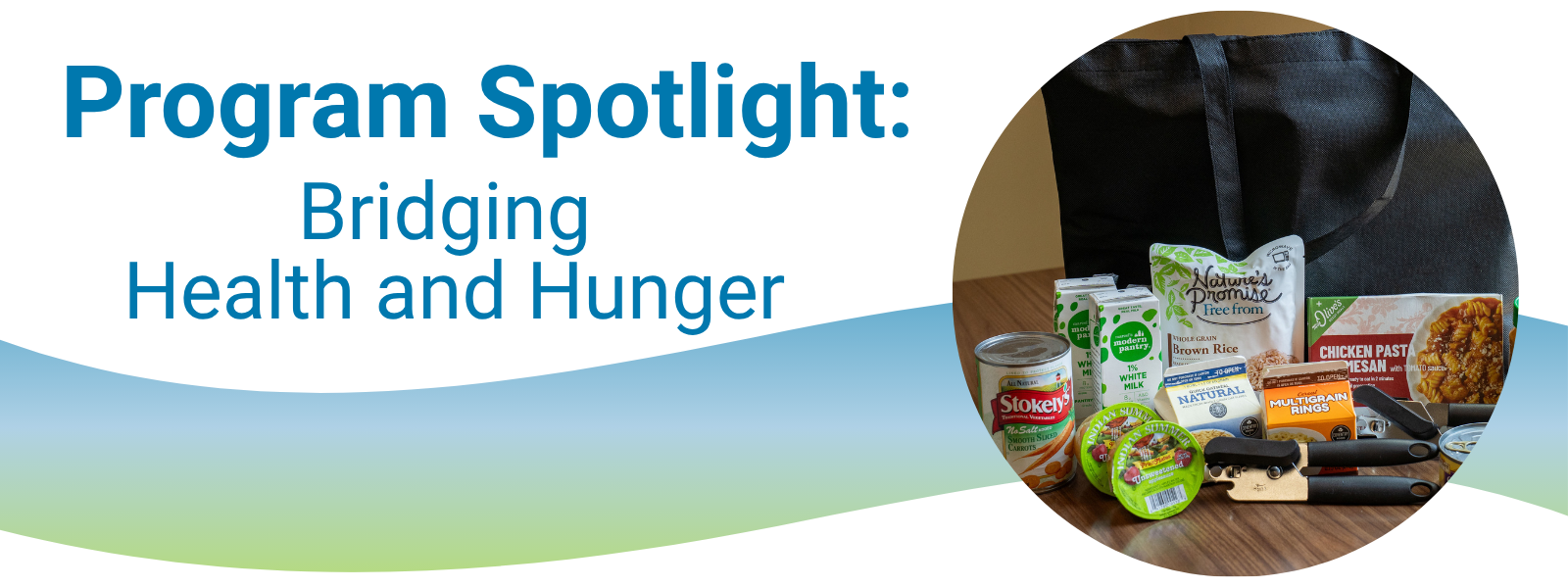
Today, all MaineGeneral outpatient practices screen patients for food insecurity. At 28 of our practices, staff can offer emergency food bags to patients who screen positive. These food bags, purchased from Good Shepherd Food Bank for $8-$12 each, contain 2-3 days of shelf stable food such as rice, oatmeal, peanut butter, canned vegetables, fruit, milk and tuna. Patients without access to a kitchen may instead be given just-in-time food that requires no preparation, like granola bars or peanut butter crackers. Hannaford Gift Cards may also be given to provide additional support and make it possible for patients to access dairy, meat, fresh fruit and vegetables. To connect them to long-term relief, patients also receive a guide to community and government resources like food banks, Meals on Wheels, and nutrition benefit programs like SNAP.
Through this process, in fiscal year 2024 alone,
- 33,834 patients were screened for food insecurity
- 2,713 patients screened positive
- 1,357 patients accepted emergency food bags, which is 14,927 lbs. of food
- 1,652 food resource guides were distributed.
Even more compelling than these numbers are the personal responses from those who have been on the giving and receiving end of this program. When one patient was screened for hunger, he revealed to his practitioner that he hadn’t eaten for 3 days; another senior patient was so relieved to be offered an emergency food bag that he burst into tears. We have learned that providing these resources not only reduces patients’ stress, but also provides relief to staff. Our practitioners also tell us that they’re more comfortable screening patients for food insecurity, knowing they have a resource on hand to offer if a patient is hungry. “I sleep better knowing our patients have some food to eat,” one staff member said.
As food prices rise and social programs face an uncertain future, local programs that address hunger are needed more than ever. If you are interested in learning more about supporting MaineGeneral's Community Health and Hunger Program, please email philanthropy@mainegeneral.org or call 207.626.1809.